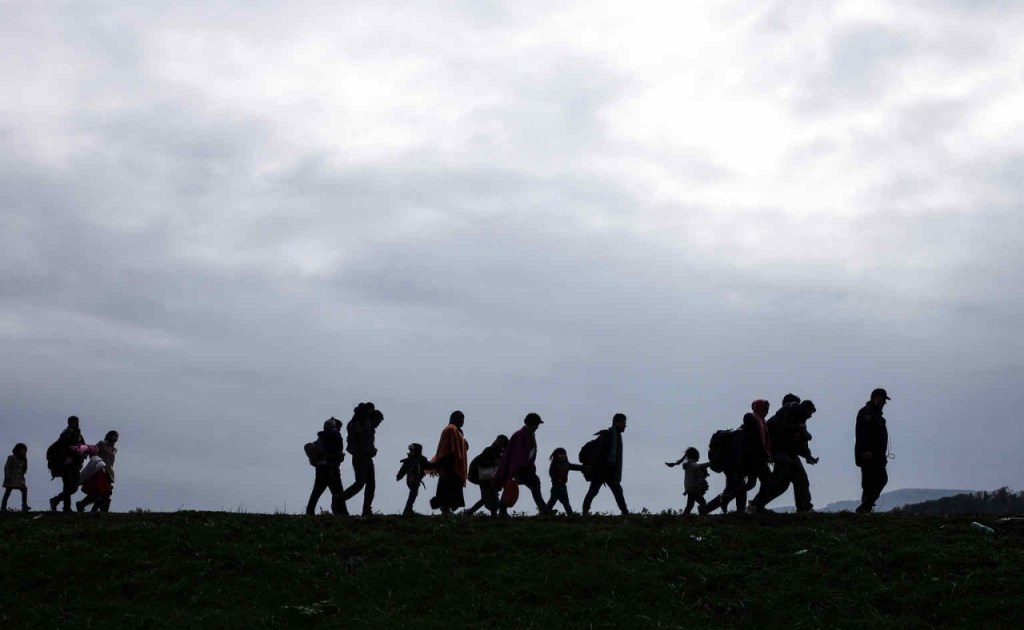
According to the census conducted in India there are two types of migration – Migration by Birth place and Migration by place of last residence. When a person is enumerated in Census at a place, i.e., village or town, different from her/his place of birth, she/he would be considered a migrant by place of birth. A person would be considered a migrant by place of last residence, if she/he had last resided at a place other than her/his place of enumeration.
The Census also captures the reasons for migration. The following reasons for migration from place of last residence are captured: Work/Employment, Business, Education, Marriage, moved after birth, Moved with household and any other.
The data on migration by last residence in India as per Census 2001 shows that the total number of migrants was 31.4 crore. In the decade 1991-2001, about 9.8 crore persons migrated to a new place from their place of last residence. Out of these migrants by last residence, 8.1 crore were intra-state migrants, 1.7 crore inter-state migrants and 7 lakh international migrants. The largest volume is confined to migration from one part of the State to another.
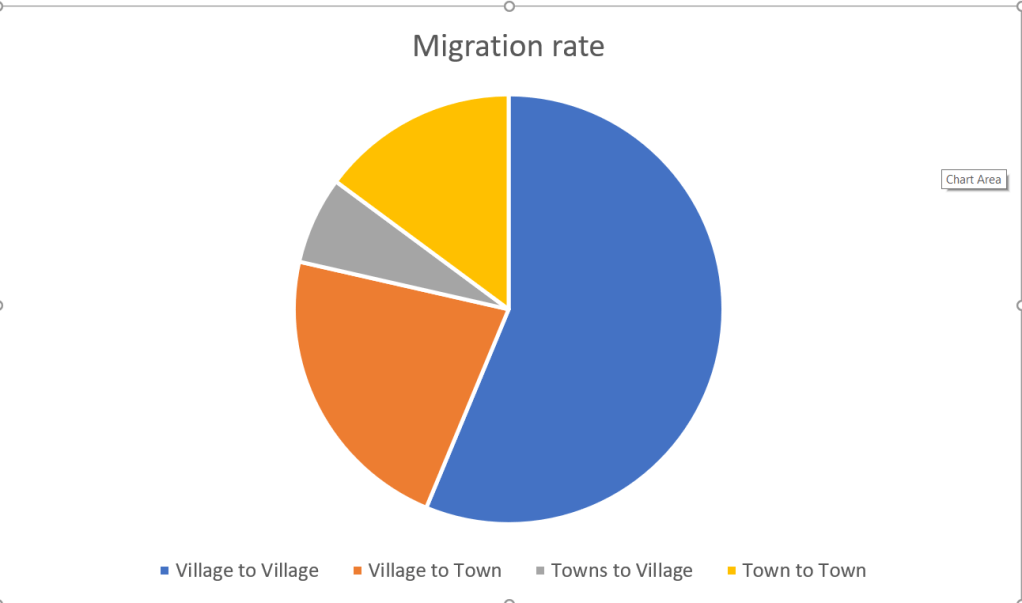
As per 2001 Drop-in-Article: Census of India 2011, about 5.3 crore persons migrated from one village to another. The number of migrants from villages to towns was about 2.1 crore. Similarly, number of migrants from towns to villages was about 62 lakh and from one town to another about 1.4 crore. The number of net migrants by last residence during the past decade, i.e., the difference between in–migrant and out–migrants for each State, showed Maharashtra at the top of the list with 23.8 lakh net migrants, followed by Delhi (17.6 lakh), Gujarat (6.8 lakh) and Haryana (6.7 lakh) as per Census 2001. Uttar Pradesh (-26.9 lakh) and Bihar (- 17.2 lakh) were the two states with largest number of persons migrating out of the two states. Migration into large metropolises were significant in 1991-2001 with Greater Mumbai UA drawing about 24.9 lakh migrants, Delhi UA about 21.1 lakh migrants, Chennai UA about 4.3 lakh migrants to name the largest three urban destinations in the country. As the trend in migration to large Urban Agglomerations continued, the Census 2011 is likely to show a spurt in population in these places.
Out of all these migrants most of them are students who migrate from their hometown to main cities in India because- under developed education system in their hometown, a smaller number of opportunities, does not have quality of education, poor job opportunities and also the choice of field in education is poor. Students face problems even after migrating to main cities in India, they suffer with getting used to completely new environment and culture, language problems, financial problems, finding proper and safe residence and learning to stay away from their family and being self-dependent.
Some students migrate from their hometown to other main cities to study by choice. I have interviewed a couple of students in our college (Shahal M and Aditi Anisha) they are both from different parts of India who have migrated to Bangalore for studying propose by choice.
Q& A session with of the student migrants
Just like them there are a lot of students who come from the same background and face the same problems.
Beside education, India’s business capital Mumbai has taken in the highest number of migrants — as per the 2011 Census, there were 90 lakh immigrants in Mumbai, while Delhi stood second with 63%. Uttar Pradesh stood third, but there is a possibility that a large number of people moved to places close to Delhi (like Noida) and commuted to the capital for work. ��Wl�J���J�C:�g�
 Muscle and Music